Suggested Methods of Mounting Free-Flex® Pivots
Standard and special-order pivot mounting configurations from Riverhawk
Overview
For most applications, Riverhawk recommends orienting the pivot to operate with a Vc load condition — a pure radial load located 90° from the clearance slots, which tends to place the flexures in compression. The first seven methods below apply to standard Free-Flex® pivots available from stock. The remaining methods require special-order pivots.
Jump to method
Standard Stock Pivot Methods
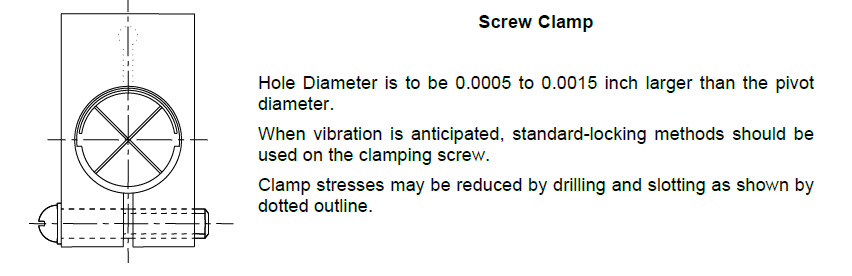
Screw Clamp
- Hole diameter to be 0.0005 to 0.0015 inch larger than the pivot diameter
- When vibration is anticipated, standard locking methods should be used on the clamping screw
- Clamp stresses may be reduced by drilling and slotting as shown by dotted outline
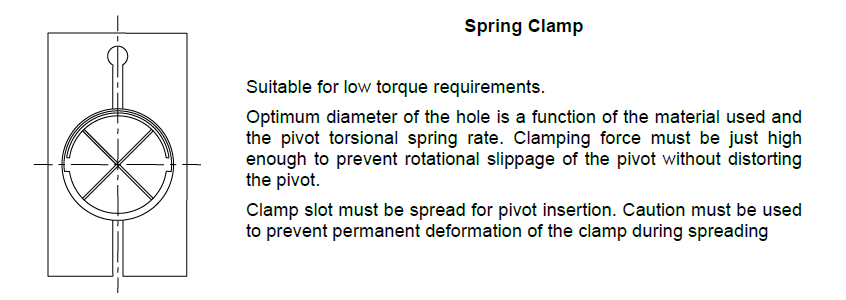
Spring Clamp
- Suitable for low torque requirements
- Optimum hole diameter is a function of material used and pivot torsional spring rate
- Clamping force must be just high enough to prevent rotational slippage without distorting the pivot
- Clamp slot must be spread for pivot insertion — use caution to prevent permanent deformation during spreading
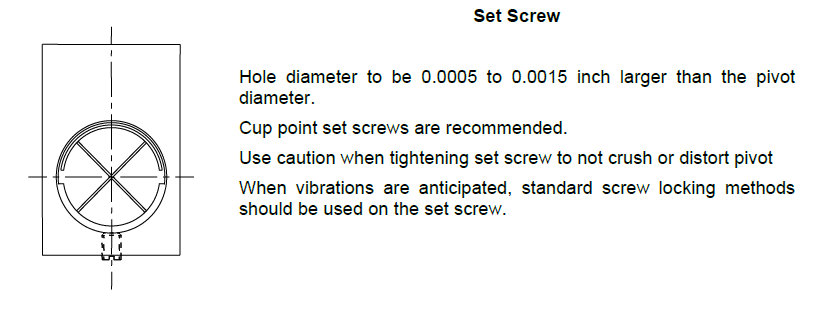
Set Screw
- Hole diameter to be 0.0005 to 0.0015 inch larger than the pivot diameter
- Cup point set screws are recommended
- Use caution when tightening — do not crush or distort the pivot
- When vibration is anticipated, standard screw locking methods should be used
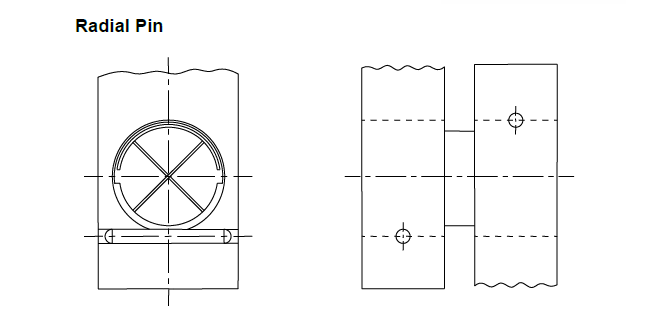
Radial Pin
- Standard stock-pivot mounting method for positive rotational retention
- Pin is inserted radially through the housing into the pivot body
- Provides secure axial and rotational locking in high-vibration environments
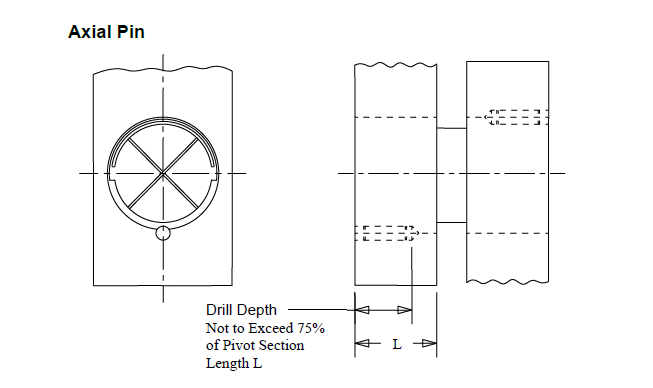
Axial Pin
- Standard stock-pivot method — pin locks axial position
- Drill and ream pin hole at time of assembly
- Ensure the pin, drill, and reamer do not contact the flexures at any time
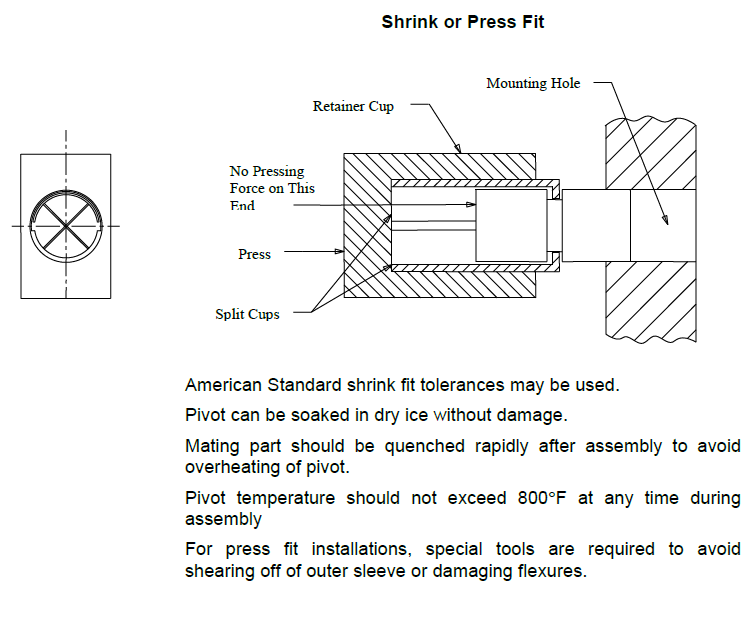
Shrink or Press Fit
- American Standard shrink fit tolerances may be used
- Pivot can be soaked in dry ice without damage
- Mating part should be quenched rapidly after assembly to avoid overheating the pivot
- Pivot temperature must not exceed 800°F at any time during assembly
- For press fit installations, special tools are required to avoid shearing the outer sleeve or damaging flexures
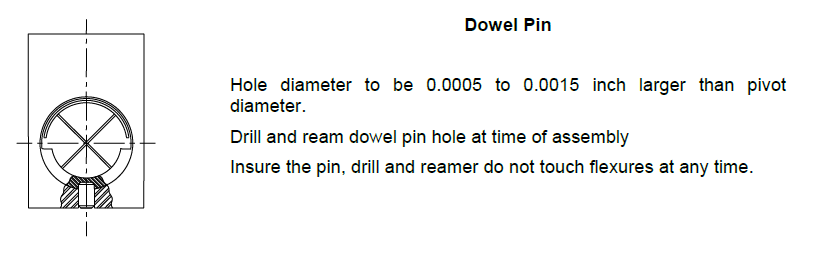
Dowel Pin
- Hole diameter to be 0.0005 to 0.0015 inch larger than pivot diameter
- Drill and ream dowel pin hole at time of assembly
- Ensure the pin, drill, and reamer do not touch the flexures at any time
Special Order Required
The following methods are not applicable to stock pivots. Contact Riverhawk Company or your nearest Free-Flex® distributor to review your special mounting needs.
Non-Standard Pivot Installations
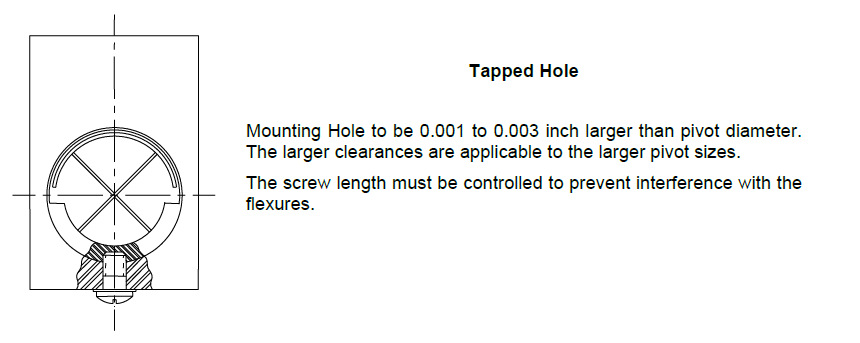
Tapped Hole
- Mounting hole to be 0.001 to 0.003 inch larger than pivot diameter (larger clearances for larger pivot sizes)
- The screw length must be controlled to prevent interference with the flexures
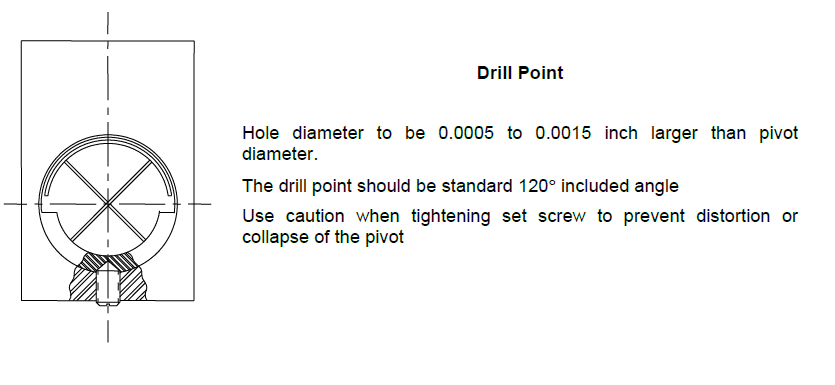
Drill Point
- Hole diameter to be 0.0005 to 0.0015 inch larger than pivot diameter
- The drill point should be a standard 120° included angle
- Use caution when tightening to prevent distortion or collapse of the pivot
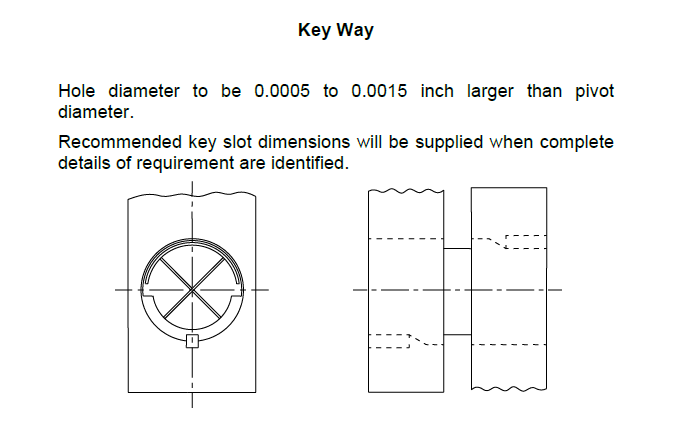
Key Way
- Hole diameter to be 0.0005 to 0.0015 inch larger than pivot diameter
- Recommended key slot dimensions will be supplied when complete details of the requirement are identified
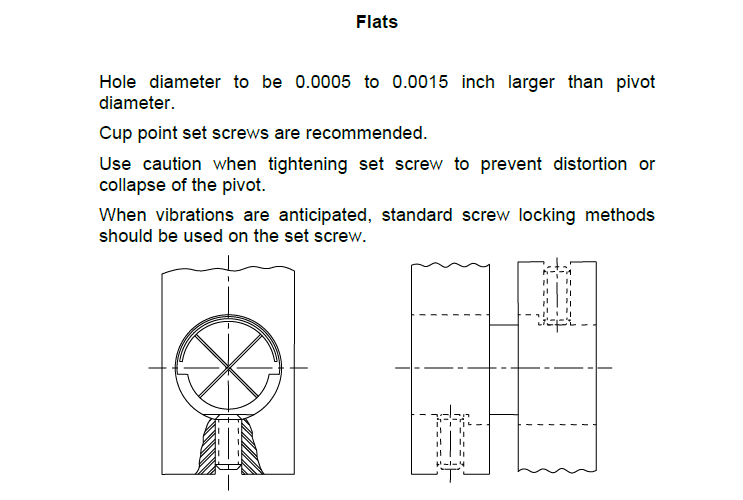
Flats
- Hole diameter to be 0.0005 to 0.0015 inch larger than pivot diameter
- Cup point set screws are recommended
- Use caution when tightening to prevent distortion or collapse of the pivot
- When vibration is anticipated, standard screw locking methods should be used
Suggested Methods of Mounting Free-Flex® Pivots — PDF
Download the original document for offline reference.
Need help selecting the right mounting method for your application?